
Agree on the session before you start
Arrival in Deathmatch is a useful setting for a focused team session because you can give yourself one clear job: contribute to the team without wasting every life on the same approach. Before starting, confirm the room name, map, mode and team positions. If you want to practise against a friend, check that you are actually on opposite sides rather than relying on the order of the player list.
Treat your first few encounters as observation. Notice where you can see a long approach, where a doorway blocks that view and which nearby cover lets you retreat. This guide offers a method for learning the space; it does not assume a particular weapon, damage value or a fixed winning route.
Cover a different angle from your teammate
Two players watching exactly the same opening can leave another approach exposed. Move close enough to support each other, but choose complementary views. One player can watch the longer sightline while the other checks the nearer opening or the route behind the pair.
Avoid crowding a narrow doorway. Give the first player room to move back, and avoid stepping across a teammate’s aim at the moment they engage. Small spacing decisions make your next action more predictable for the rest of the team, even without a complicated strategy.
Move from cover with a purpose
Before crossing an exposed area, choose your next stopping point. A short move to cover gives you a chance to check the situation again; running without a destination makes it harder to react when an opponent appears. If a route repeatedly leads to the same loss, pause and try another approach instead of assuming a faster run will solve it.
Reload when you have a safe moment rather than automatically after every shot. Listen for useful game audio and keep the view around your current position in mind. An opponent you no longer see may still be near the last corner you checked.
Regroup after a lost encounter
A respawn is a chance to reset the plan. Find out where your teammate is before repeating a solo push. A short wait can put two players into the next encounter together instead of sending them one at a time into a prepared opponent.
If you are communicating, keep information short and observable: where you last saw the opponent, whether you are moving or holding, and whether you need time to reload. Describe a landmark that both players recognise. Avoid a long explanation while your teammate is already fighting.
Review one habit at the end
After a completed match, compare one decision rather than only the final score. Did you lose contact with your teammate? Did you expose the same angle repeatedly? Did an alternative route make the next encounter easier? Choose a single adjustment for the following session so you can tell whether it helped.
For a friendly test, exchange red and blue positions and keep the other room settings consistent. If an error interrupts the match, record the time, the visible message and who was affected. Do not treat an interrupted test as evidence that a complete match has passed. Clear observations help both your teamplay and any problem report.
More from the field journal
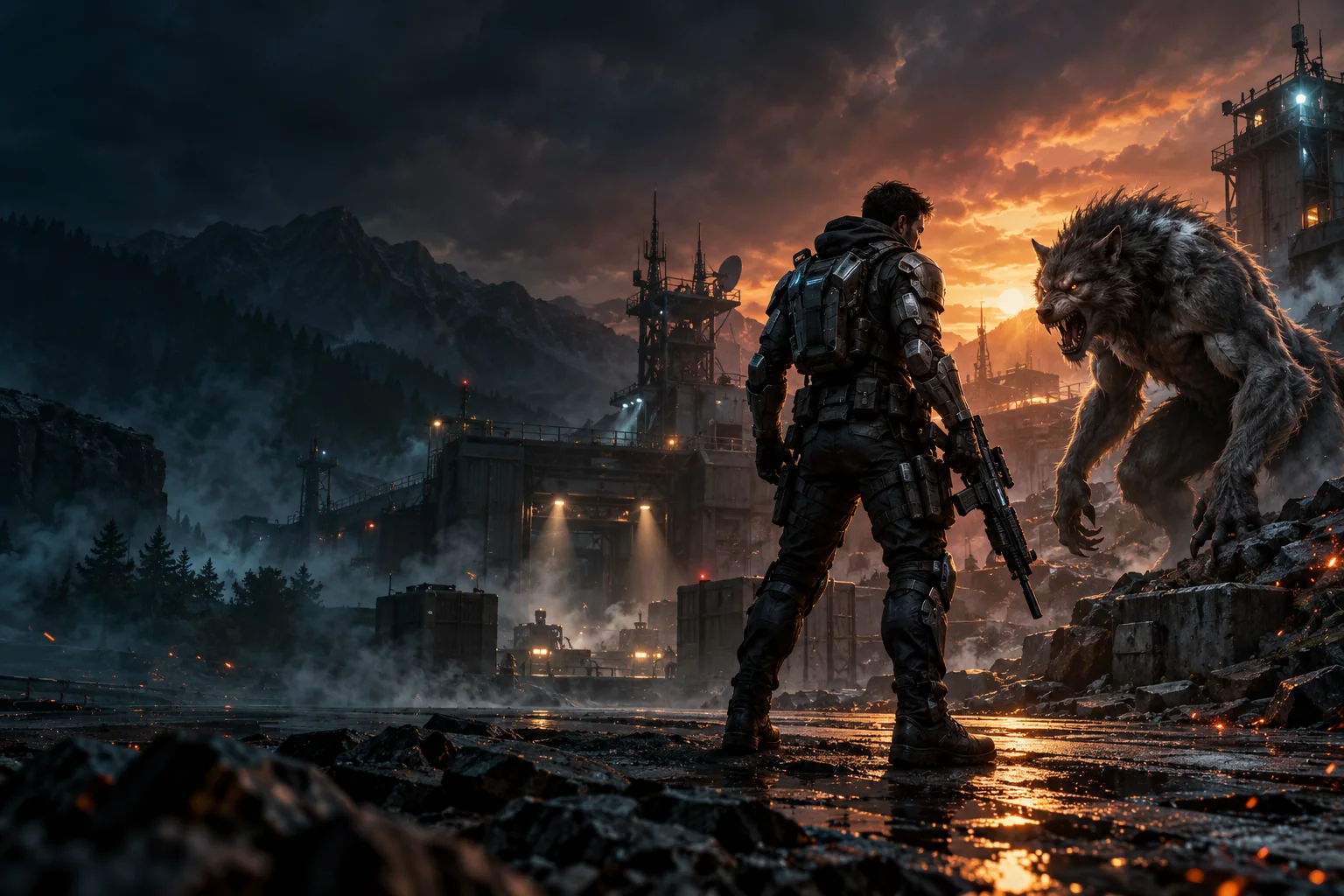
WolfTeam Legacy Mansion Map Guide: Win the Two-Storey Villa Arena
Wolfory Mansion joins Deathmatch and wolf-only Deathmatch. Learn the villa, courtyard, fountain garden, ramps and galleries, plus the refreshed standard EM16.
Read the guide ↗WolfTeam Legacy Rank Guide: How GP Promotions Work from Recruit to General
How the rank system works in WolfTeam Legacy on Wolfory: earn GP in real matches, promote automatically from Recruit toward General, and track every step on the site.
Read the guide ↗
WolfTeam Legacy First Week Plan: A Day-by-Day Roadmap for New Players
A practical first-week plan for new WolfTeam Legacy players on Wolfory: claim your welcome gift, train with bots, play your first rewarded matches and find your pack.
Read the guide ↗